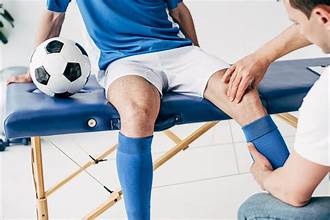
The Role of Physiotherapy in Sports Injury Rehabilitation: From Sideline to Finish Line
In the world of competitive sports and active lifestyles, an injury is more than just a physical setback—it is a disruption of your passion and performance. Sports Physiotherapy is a specialized clinical field dedicated to the assessment, treatment, and prevention of injuries resulting from athletic activity.
The goal of a professional sports rehab program is not simply to "fix" the pain, but to return the athlete to their sport with enhanced strength, corrected biomechanics, and reduced risk of re-injury.
What Sets Sports Physiotherapy Apart?
While general physiotherapy addresses daily functional movements, sports-specific rehabilitation focuses on high-demand performance. Athletes require explosive power, rapid changes in direction (agility), and extreme endurance. A sports physiotherapist analyzes these specific demands to tailor a recovery plan that mimics the intensity of the game.
The 4-Phase Recovery Protocol
To ensure a safe and successful "Return to Play," we follow a structured, evidence-based progression:
Phase 1: Acute Protection & Pain Management
Immediately following an injury, the focus is on controlling inflammation and protecting damaged tissues. Using the PEACE & LOVE principle (Protection, Elevation, Compression, and Education), we utilize modalities like Cryotherapy and Electrotherapy to manage pain without heavy reliance on medication.
2. Restoration of Mobility & Muscle Activation
Once the initial swelling subsides, the priority shifts to restoring a full Range of Motion (ROM). We use manual therapy and targeted "activation" exercises to ensure that the muscles surrounding the injury remain functional and don't begin to waste away (atrophy).
3. Progressive Loading & Strength Building
Healing tissues need "load" to become strong again. During this phase, we introduce resistance training and eccentric loading. This is the most critical stage for rebuilding the structural integrity of tendons, ligaments, and muscles.
4. Sport-Specific Functional Drills
The final stage involves returning to the field. We implement drills that simulate your specific sport—such as jumping for basketballers, sprinting for runners, or trunk rotation for golfers. We only provide a "clearance to play" once you have passed rigorous objective strength and balance tests.
Common Athletic Injuries We Manage
Our specialized protocols are designed to treat:
Ligamentous Injuries: ACL, MCL, and PCL tears of the knee, as well as chronic ankle sprains.
Tendon Pathologies: Achilles tendonitis, Patellar tendonitis, and Tennis/Golfer’s Elbow.
Muscle Strains: Hamstring, Quad, and Groin tears common in sprinting and football.
Overuse Injuries: Stress fractures, Shin Splints, and Runner’s Knee.
Shoulder Instability: Rotator Cuff tears and Labral issues in overhead athletes.
The Power of Prevention: Biomechanical Analysis
The most successful athletes use physiotherapy as a preventative tool. Through advanced Gait Analysis and Movement Screening, we can identify:
Muscle Imbalances: Detecting if one side of the body is overcompensating for the other.
Technique Flaws: Correcting a running stride or a throwing motion that puts undue stress on joints.
Fatigue Monitoring: Adjusting training loads to prevent "overtraining syndrome" and stress-related injuries.
Conclusion: Elevate Your Recovery
A sports injury doesn't have to be a permanent roadblock. With the right clinical guidance, it can be an opportunity to rebuild a more resilient body. Our mission is to provide the elite-level care that allows you to return to the sport you love with total confidence.
Don't stay on the sidelines. Schedule your sports-specific assessment today.
What We Treat / Offer
Ready to Start Your Recovery?
Book a consultation with our expert physiotherapists today.