Orthopaedic Condition
Ankylosing Spondylitis
A chronic inflammatory condition of the spine that causes pain, stiffness, and reduced flexibility, especially in the lower back.
A chronic inflammatory condition of the spine that causes pain, stiffness, and reduced flexibility, especially in the lower back.
What is Ankylosing Spondylitis?
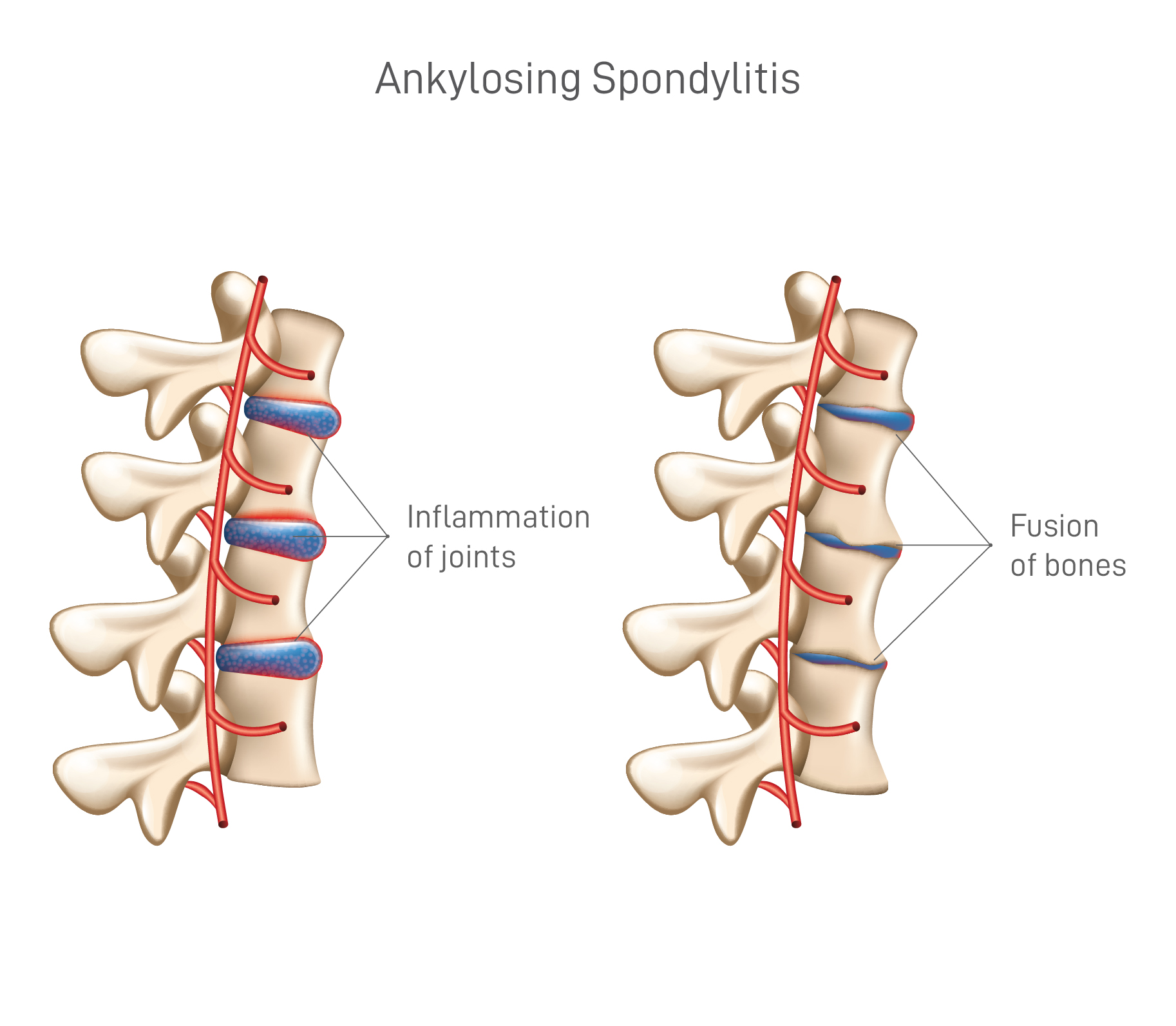
→ Ankylosing spondylitis is a chronic inflammatory disease that primarily affects the spine and sacroiliac joints, leading to pain, stiffness, and reduced flexibility. Over time, the inflammation can cause the vertebrae to fuse together, resulting in a rigid and less mobile spine. The condition usually begins in early adulthood and can progressively affect posture and movement.
Causes
→ Autoimmune response
→ Genetic factors (HLA-B27 gene association)
→ Family history
→ Environmental triggers
Symptoms
→ Chronic lower back pain
→ Morning stiffness
→ Reduced spinal flexibility
→ Pain improves with activity
→ Fatigue
→ Stooped posture (in advanced cases)
→ Pain in hips and shoulders
Diagnosis
→ Clinical examination by doctor
→ X-ray of spine and sacroiliac joints
→ MRI (early detection)
→ Blood tests (HLA-B27, inflammatory markers)
→ Assessment of spinal mobility
Treatment Management
→ Physiotherapy (posture and flexibility exercises)
→ Regular exercise and stretching
→ Pain relief medications (NSAIDs)
→ Biological therapies (in severe cases)
→ Posture correction
→ Lifestyle modifications
→ Surgery (rare cases)
Book a consultation with our expert orthopaedic physiotherapist today.