Orthopaedic Condition
lumbar spinal stenosis
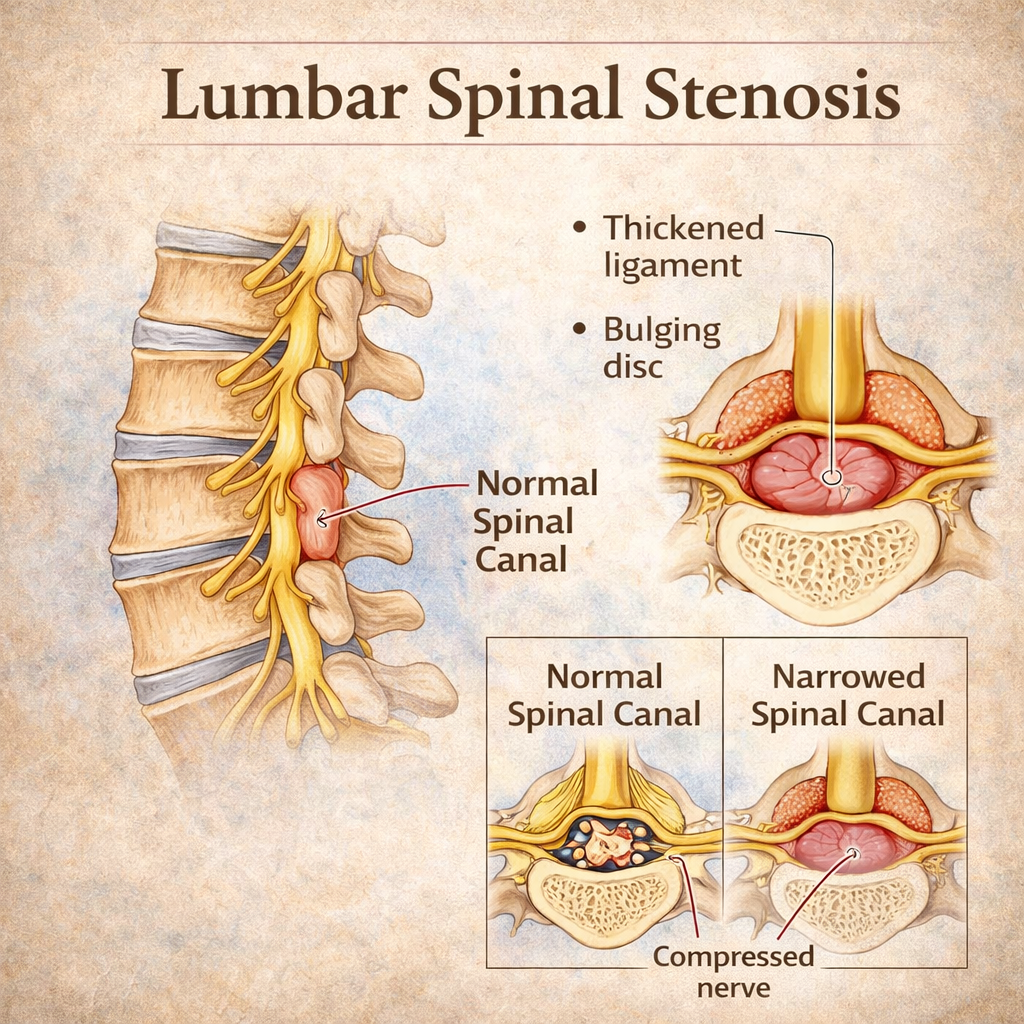
Narrowing of the lower spinal canal causing back pain, leg pain, and difficulty walking.
Narrowing of the lower spinal canal causing back pain, leg pain, and difficulty walking.
What is Lumbar Spinal Stenosis?
→ Lumbar spinal stenosis is a condition where the spinal canal in the lower back (lumbar region) becomes narrowed, putting pressure on the spinal cord and nerves. This can lead to pain, numbness, and weakness in the lower back, buttocks, and legs, especially during walking or standing.
Causes
→ Age-related degeneration (most common)
→ Osteoarthritis and bone spurs
→ Herniated or bulging intervertebral discs
→ Thickened ligaments in the spine
→ Spinal injuries or trauma
→ Congenital spinal narrowing
→ Degenerative disc disease
→ Tumors or infections (rare cases)
Symptoms
→ Lower back pain
→ Pain radiating to buttocks, thighs, or legs (sciatica-like pain)
→ Numbness or tingling in legs or feet
→ Weakness in lower limbs
→ Pain that worsens with walking or standing (neurogenic claudication)
→ Relief when sitting or bending forward
→ Difficulty walking long distances
→ Loss of balance (in severe cases)
Diagnosis
→ Clinical examination by doctor
→ Neurological assessment
→ X-ray of the spine
→ MRI (most effective imaging for stenosis)
→ CT scan or CT myelogram
→ Assessment of reflexes, strength, and sensation
→ Medical history evaluation
Treatment Management
→ Physiotherapy (strengthening and flexibility exercises)
→ Pain medications (analgesics, NSAIDs)
→ Epidural steroid injections (to reduce inflammation)
→ Activity modification and posture correction
→ Weight management
→ Use of lumbar support or braces (in some cases)
→ Surgery (laminectomy or decompression in severe cases)
→ Regular follow-up and rehabilitation therapy
Book a consultation with our expert orthopaedic physiotherapist today.